Weekend Scenes: Agentic AI Lessons from Lyzr
June 3, 2025
Also published on LinkedInRead there →From ‘what even is RAG?’ to demo day: my rookie ride into the world of Agentic AI.
Curious about agentic AI, I finally found my excuse to dive in. I’d been hearing buzz about “agentic AI” - the idea of autonomous AI that plans and acts on its own - but between work and life, I’d barely scratched the surface.
In Nvidia’s words, agentic AI “uses sophisticated reasoning and iterative planning to autonomously solve complex, multi-step problems.” Think of an AI that can plan your trip or run a supply chain end-to-end. I was intrigued, but life as a PM is busy.
Then I saw a post by The Product Folks about their Product Teardown series. The May 2025 edition was on Lyzr AI - an “agentic” AI platform. That was my lightbulb moment: a free challenge to play with agents, plus a built-in deadline and free credits to iterate and learn. I signed up immediately.
Deep Dive at Lyzr Academy
I jumped headfirst into Lyzr’s learning resources. Lyzr Academy has tutorials on everything from fundamentals of AI agents to advanced orchestration. I binged videos on LLMs like GPT, relearned how Transformer architectures work and discovered why Lyzr advertises pre-built RAG (retrieval-augmented generation) pipelines and vector-store support (docs.lyzr.ai).
By the end of week one, I was munching on AI theory and had way more confidence to start building an agent. Suddenly, terms like embeddings and vector stores didn’t sound like scary sci-fi - they were tools I could actually use.
Picking a Real Problem (Not Another LLM Wrapper or Chatbot)
Now armed with some LLM muscle, I forced myself off the generic chatbot train. It would’ve been easy to wrap ChatGPT in a shiny UI and call it a day - maybe churn out a PRD generator, a blog post writer, or a social media assistant (you know, the usual suspects). But I didn’t want to build yet another wrapper. I wanted to build something needle-moving - something that could actually solve a real problem, ideally one I wrestle with every day.
That’s when I thought of ACE (Automated Costing Engine) - our product at Kkonnect.io . It’s a web based software tool that helps manufacturing teams instantly (sub 5 seconds to be precise) estimate cost and cycle time from CAD files. Super useful, but like any B2B SaaS tool, activation is everything. Getting users to sign up is one thing. Getting them to understand the value, upload files, and build a habit? That’s the hard part. And that’s where good onboarding makes all the difference.
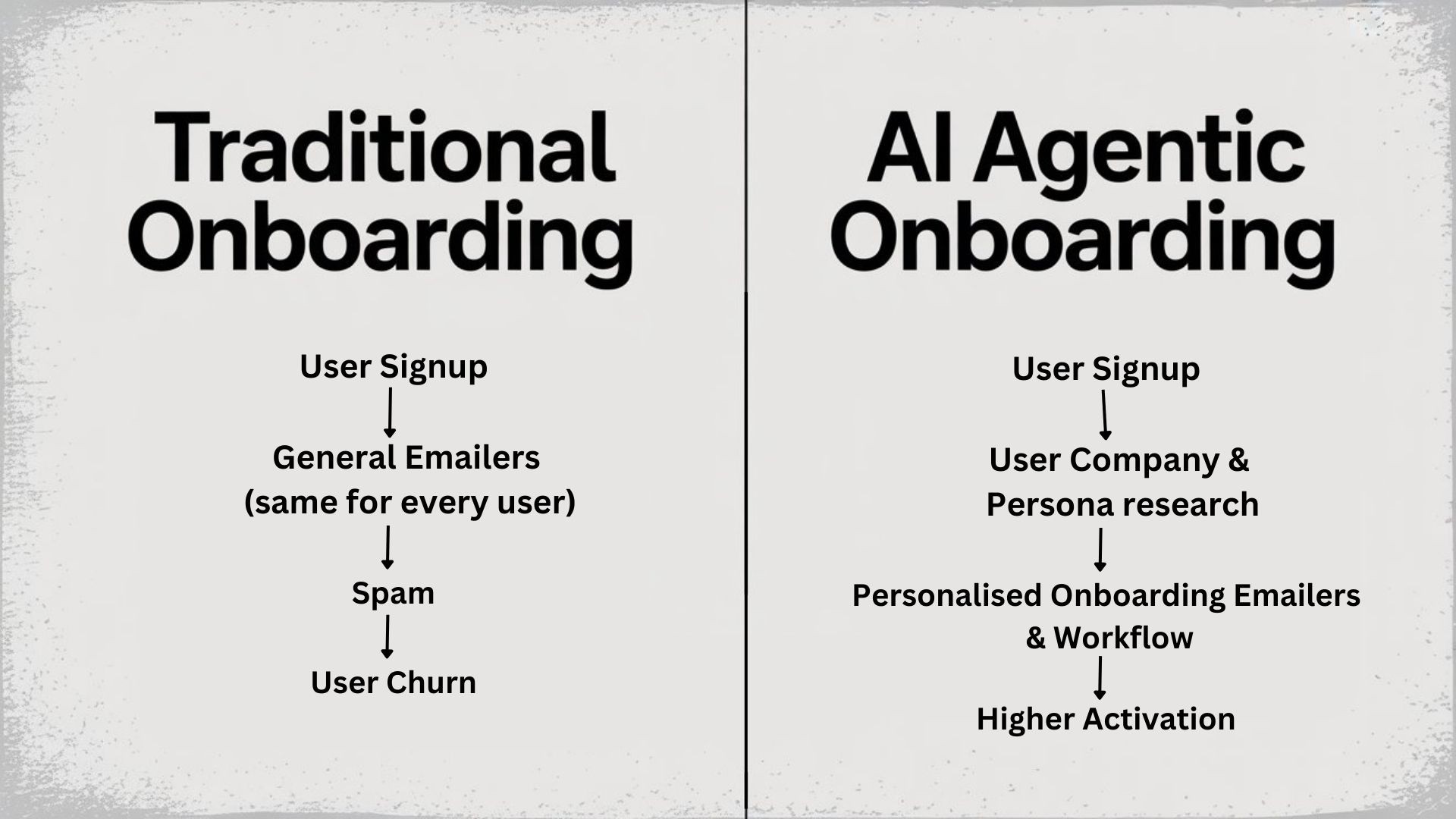
So I asked myself: what challenge do I really care about as a PM? The answer kept popping up: user onboarding. Every product - ACE included - struggles to engage new users post-signup, and I’ve seen firsthand how personalised onboarding emails can move the needle.
Lyzr’s docs brag that you can build “multi-agent workflow automations in minutes” ), but what workflow would actually help my product? I thought: what if I could automate onboarding at scale, without losing the personal touch? I envisioned a workflow that sends each new user a 7-day customised welcome journey. It would tailor content based on what the user does (their domain) and who they are (their persona) by researching on the company use cases and studying the case studies and blogs build around the product.
Suddenly, this wasn’t just a teardown entry. It was something I could imagine plugging into ACE one day. That made it real. That made it worth building.
Building the Lyzr Onboarding Agent
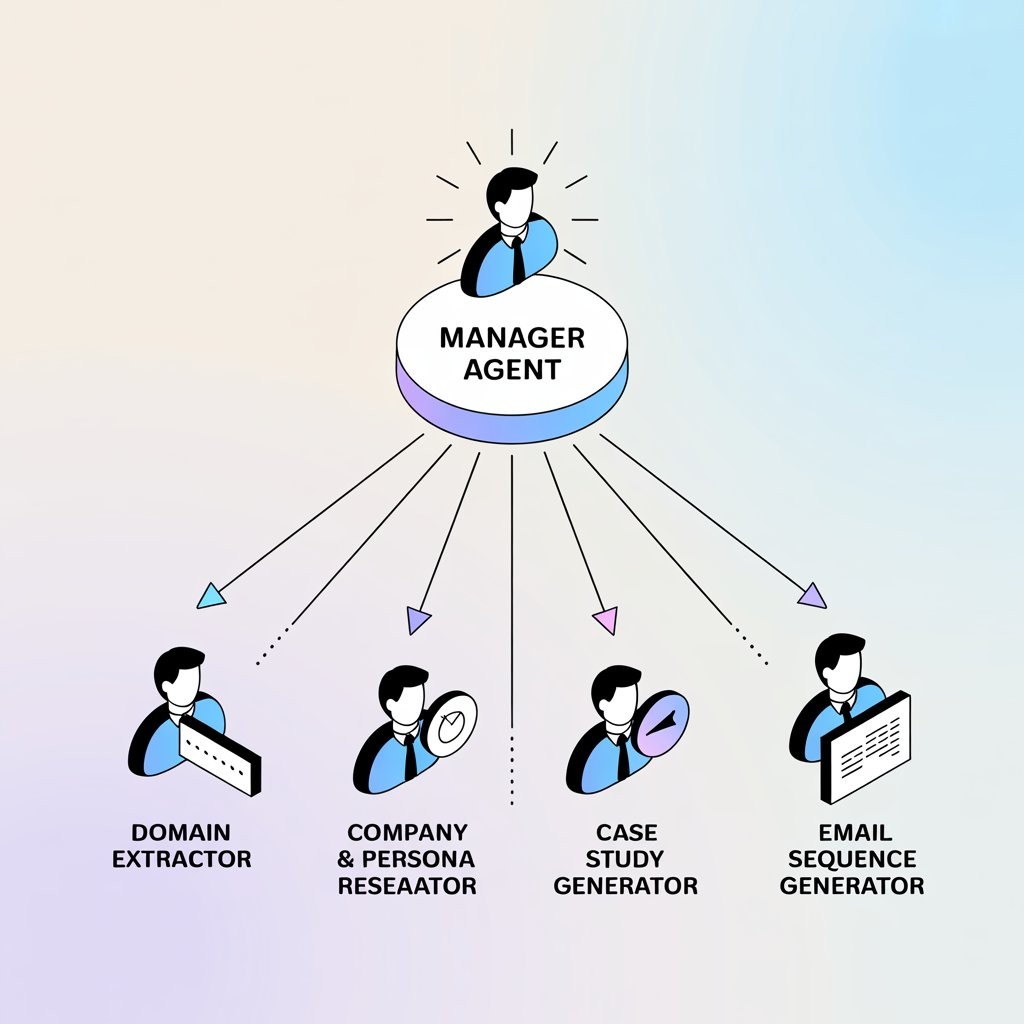
The core idea was to use a Manager Agent to orchestrate a team of Worker Agents. The manager’s job (per Lyzr’s design) is to interpret the high-level goal, break it into subtasks, and delegate them. My workflow looked like this:
Domain Extractor (Worker A): Pulls company domain from signup email. Uses simple regex + domain cleaning logic + sanity checks.
Company & Persona Researcher (Worker B): Uses the domain to build a persona profile - “data scientist,” “hobbyist,” etc. - by querying a knowledge base and web search .
Case Study Generator (Worker C): Crafts a mini-case study relevant to that persona’s domain, like “How a fintech PM used Lyzr to ship 3x faster.” Suggest which pre built public lyzr agents they can explore right away.
Email Sequence Generator (Worker D): Writes email using the persona and case study as context (subject line + preview text + body + CTA).
A single Manager Agent sits atop these workers, looping through each day’s goals and handing off tasks. All the heavy lifting of LLM prompting, RAG lookups, and so on was handled inside Lyzr’s agents, so I could focus on product logic and prompt engineering.
In the end, the system produces a unique 7-email onboarding sequence for each new user - scaling personalised outreach literally at the click of a button.
Measuring What Matters 📊
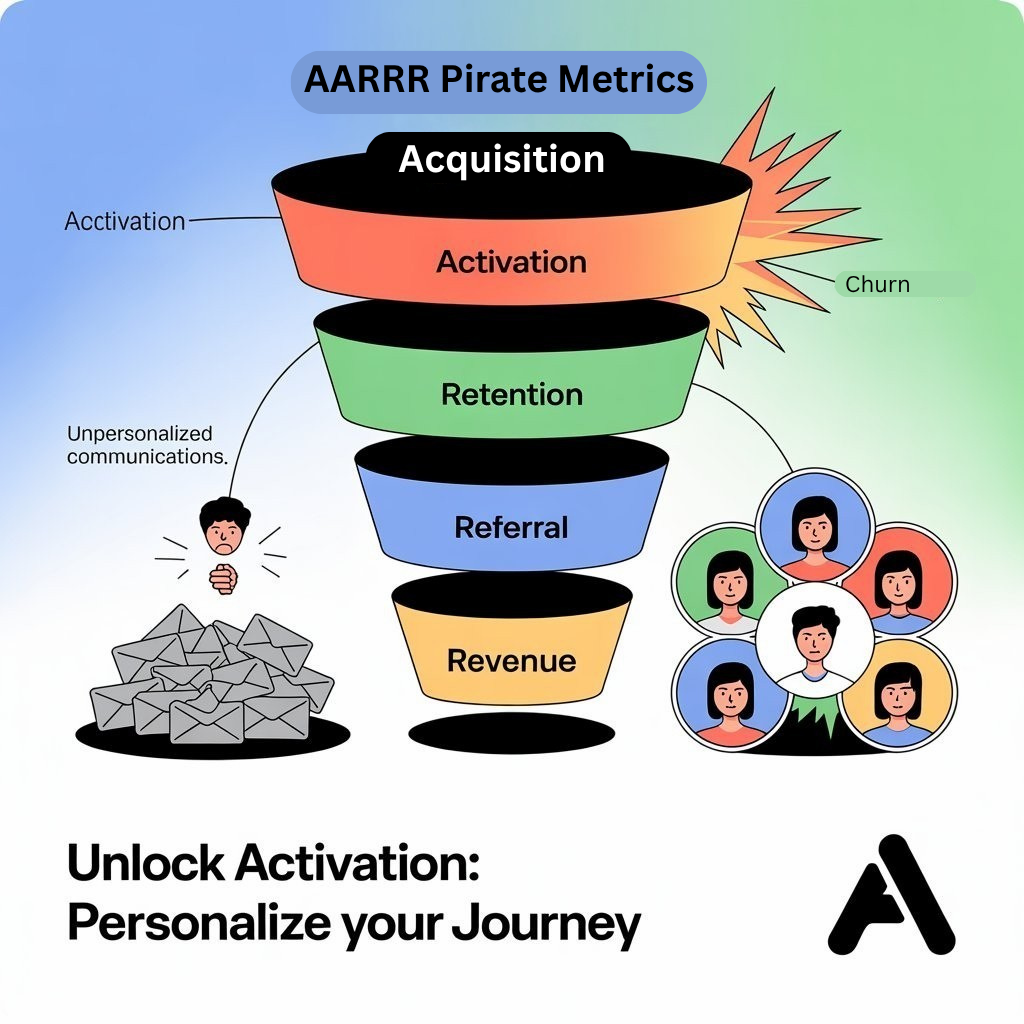
At some point, I asked myself: Is this just a fancy demo, or can it actually move the needle?
In the world of AI agents, everyone’s building. But as Lyzr aptly put it in their “State of AI Agents” report: “Everyone’s building AI agents. No one’s building adoption.”
And that hit home. Because building an agent is the easy part (well, sort of). But getting users to actually use it, find value, and come back for more - that’s where the real challenge lies.
So I started thinking like a PM again. If this onboarding agent were live inside a product like Lyzr, how would I know it’s working?
Here’s what I’d track:
Time to Value: How many days from signup does it take for a user to create their first agent?
Activation Milestones: Did the user build something meaningful, not just a “Hello World” prompt?
Repeat Engagement: How many logins occurred after signup? Are users coming back by Day 3 or Day 7?
Persona Alignment: Are different user types (PMs, data folks, engineers) receiving content that resonates with their goals?
Because in the end, it’s not about email opens or CTRs. It’s about driving meaningful product usage. If an agent can nudge users closer to success - faster, clearer, and at scale - then it’s not just smart AI. It’s smart product thinking.
Lessons, Laughs, and Next Steps
Building this felt like a crash course in PM + AI. The biggest takeaways I walked away with:
Start with a real user problem. The fanciest AI is useless if it’s solving the wrong problem. I picked onboarding because it’s a concrete PM pain point.
Break goals into small agents. Complex workflows become manageable by dividing and conquering. The Manager Agent concept in Lyzr was a game-changer for handling complexity.
Iterate fast with learning. Lyzr Academy and the community forums made it possible to learn and apply quickly. The feedback loops helped me refine prompts and logic in hours, not weeks.
Embrace the messy. AI systems aren’t perfect, and edge cases will break them. Expect to debug, fix, and re-tune - just like any software feature.
The agent performs best when powered by a rich knowledge base - think internal blogs, case studies, playbooks, and more. Layering in the company’s brand and communication guidelines takes it a step further, helping the agent maintain a consistent tone and voice that feels on-brand and personal.
If any of this sounds fun (or terrifying), I encourage you to try it too. Agentic AI frameworks like Lyzr (and others like LangChain, Microsoft’s Semantic Kernel, etc.) are now within reach, so you don’t need a PhD to build your own bots. Pick a small product scenario - maybe a welcome email drip or an internal support bot - and experiment. The tools are there to help you learn.
Grateful for the Ride 🚀
Huge thanks to The Product Folks and the Lyzr community for the resources, code examples, and feedback. If you’ve read this far, I’d love to hear your thoughts. What have you built with Agentic AI? Let’s swap stories or collaborate on a quick prototype. The AI community is amazingly open, and we all learn by building together.
Aditya MohantyJeremy YuRob CohenShashi RainaSiva Surendira
Links for Deep dive!
Presentation Deck - https://www.canva.com/design/DAGpRpcaveg/l8ohZV1eSgeGnU0SoG_8KQ/edit
Manager Agent - https://studio.lyzr.ai/agent/6834795d64c5df975ccac523
Try ACE (Automated Costing Engine): AI-Driven Costing for CNC Machining Components - Free, Fast and Accurate!
- Rahul Arethiya Product Manager Kkonnect.io (ACE)