Experiments with GPT-4 in Manufacturing
September 27, 2023
Also published on LinkedInRead there →OpenAI has recently unveiled a groundbreaking feature in ChatGPT-4: the ability to communicate using images. This capability allows users to upload images and receive detailed insights directly from the model.
This innovative feature opens up a plethora of opportunities:
Education: Students can upload diagrams, artworks, or any visual content to get detailed explanations, fostering a more interactive learning experience.
Art & Design: Artists and designers can get feedback on their creations, understand art pieces, or even get suggestions for improvements.
Travel & Tourism: Travelers can upload pictures of landmarks or locations to receive historical information, cultural significance, or even travel recommendations.
Entertainment: Dive deeper into movie scenes, artworks, or any visual media by extracting insights, trivia, or background information.
Daily Life: From identifying unknown objects to understanding complex visuals in manuals or books, the applications in everyday scenarios are endless.
With such vast potential in various sectors, my curiosity naturally steered me towards its application in the manufacturing industry, a domain close to my heart.
Being deeply embedded in the manufacturing industry, my curiosity was piqued. I pondered, "How can this feature revolutionize our day-to-day operations?" With this question in mind, I embarked on a series of experiments, and here are my findings:
#1 - A simple component
Prompt: A basic component image (rendered cad image)
Response:
Suitable manufacturing processes for the component
Recommendations based on the image
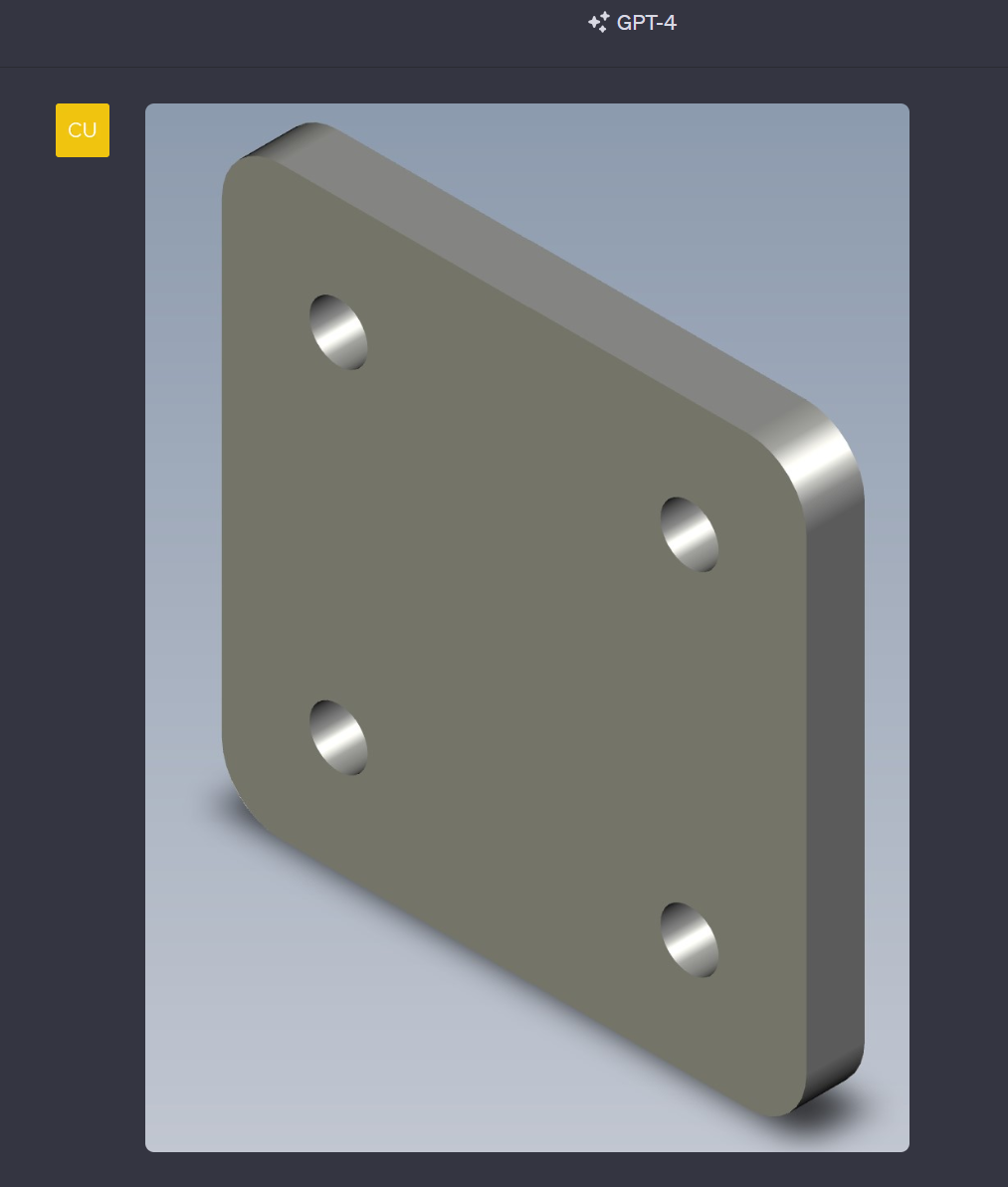
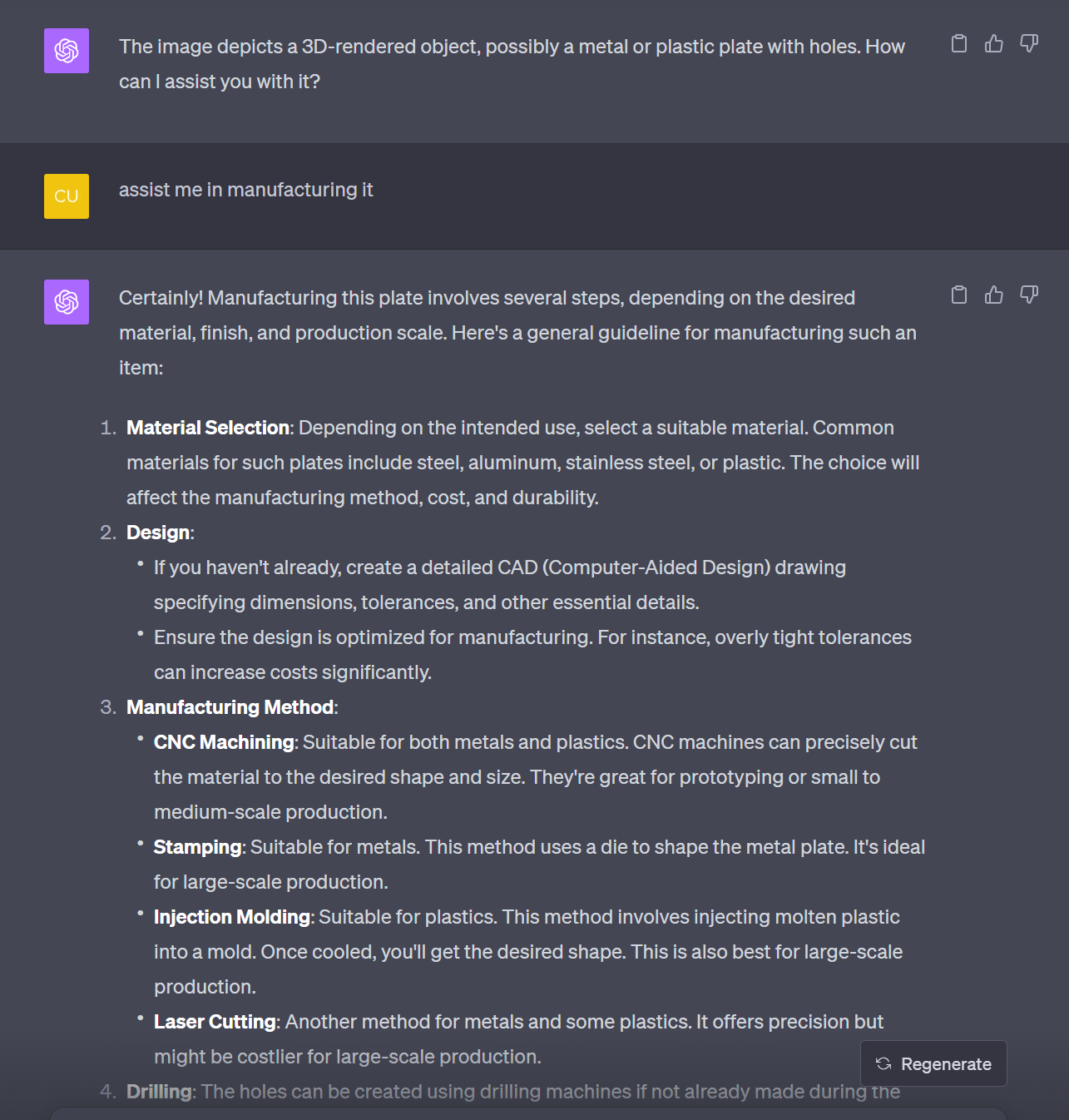
It accurately described the suitable manufacturing processes for the above component with just image.
#2 - A bit different component
Prompt: An image of a unique component.
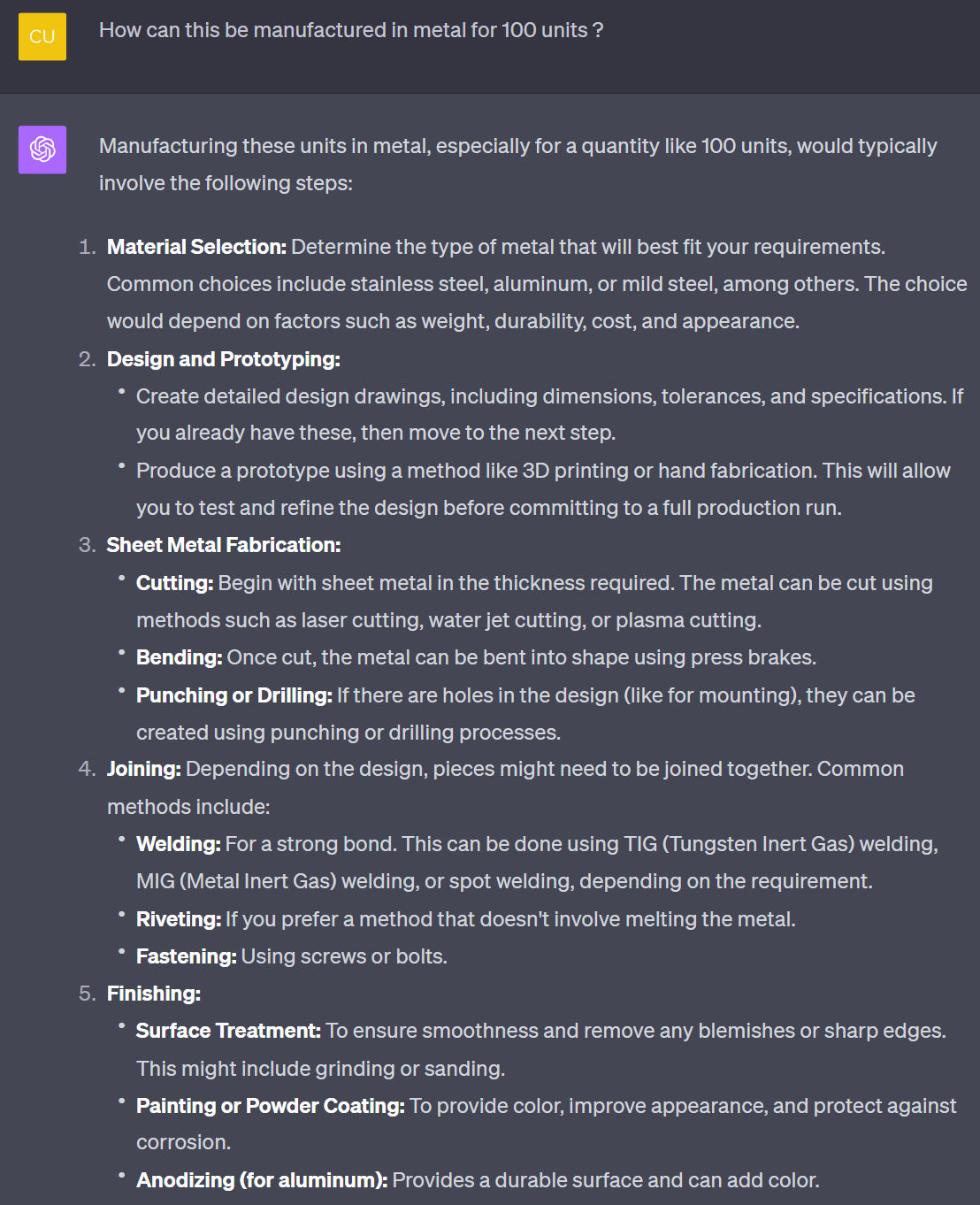
Response:
Detailed component analysis.
Identification of intricate details like mounting holes.
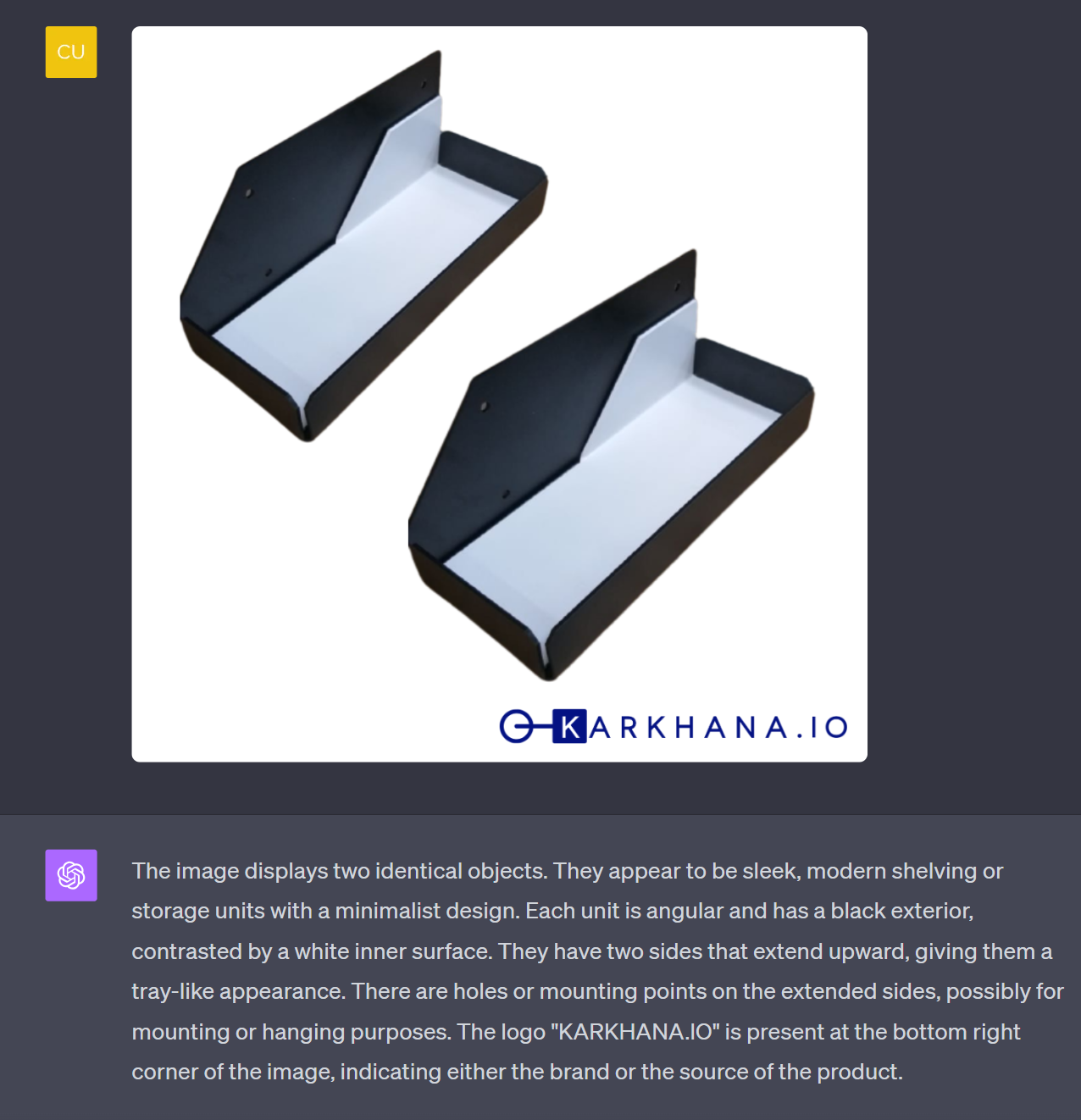
Then gave some very basic input on material and quantity. Output was spot on! It correctly analyzed it as a sheet metal component and suggested the process accordingly - laser cutting, bending and welding.
#3 Let's try BOM
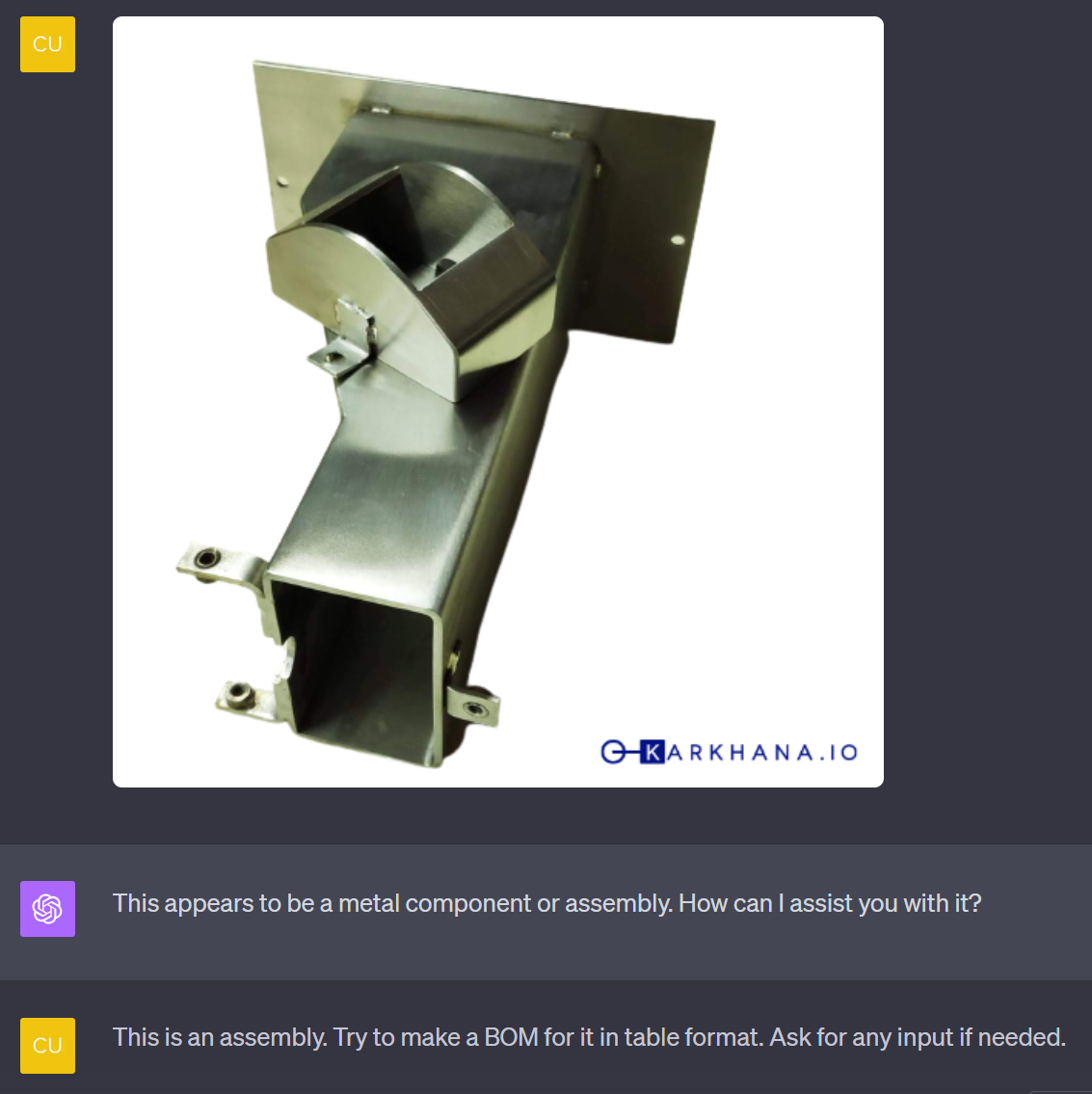
Prompt: An image of an assembly
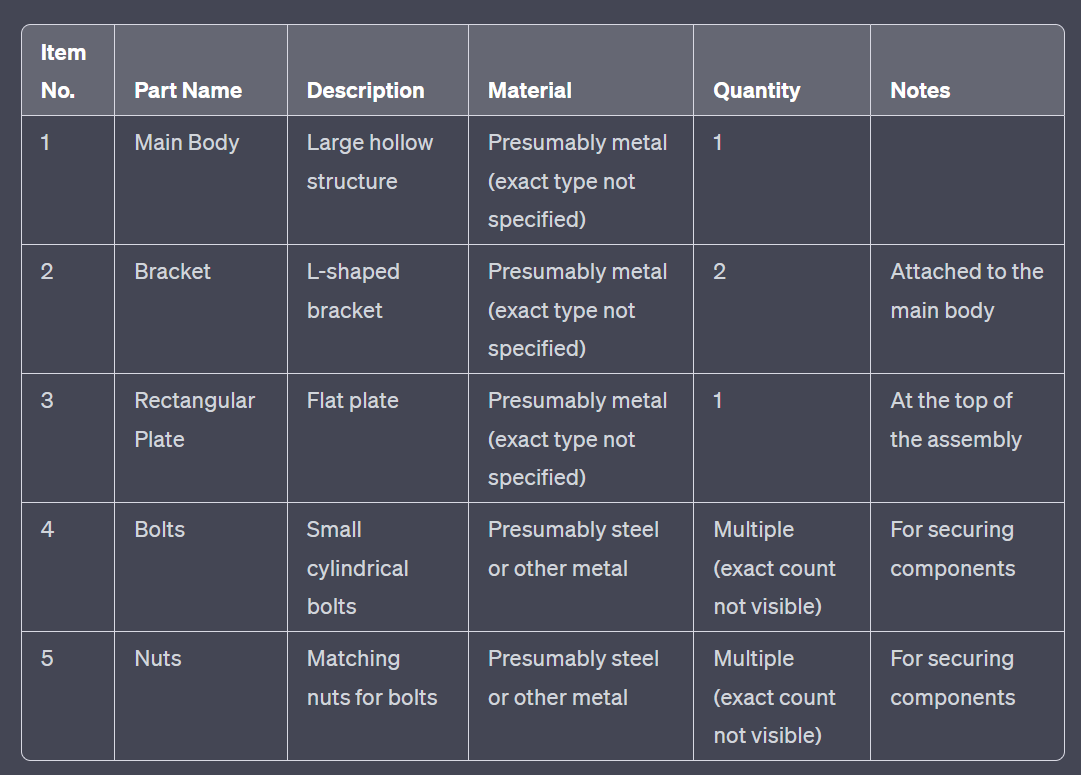
Response:
Assembly detection and analysis
BOM preparation
#4 An Engineering drawing
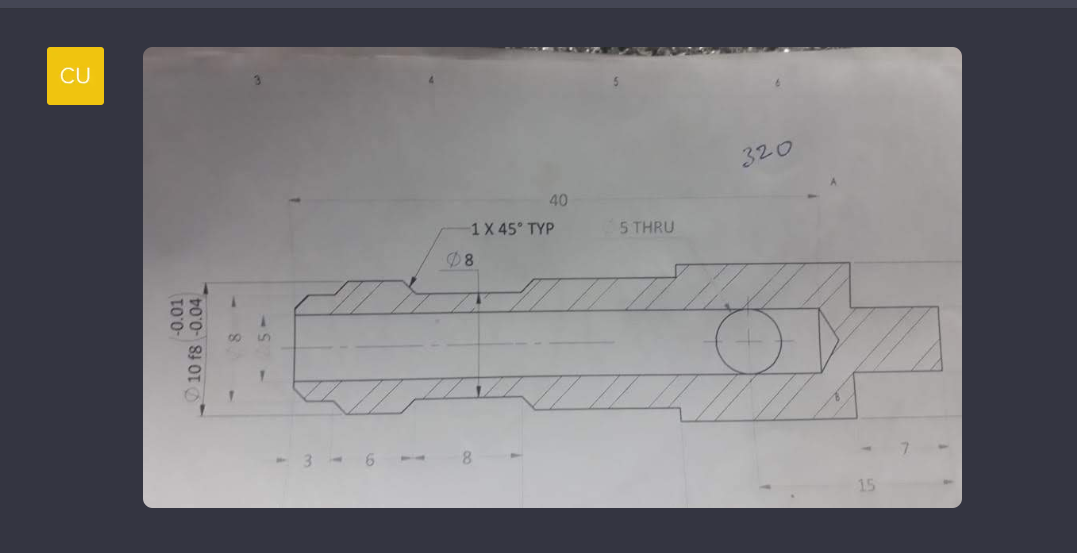
Prompt: Technical drawing of a component.
(normal phone image, retrieved from google photos)
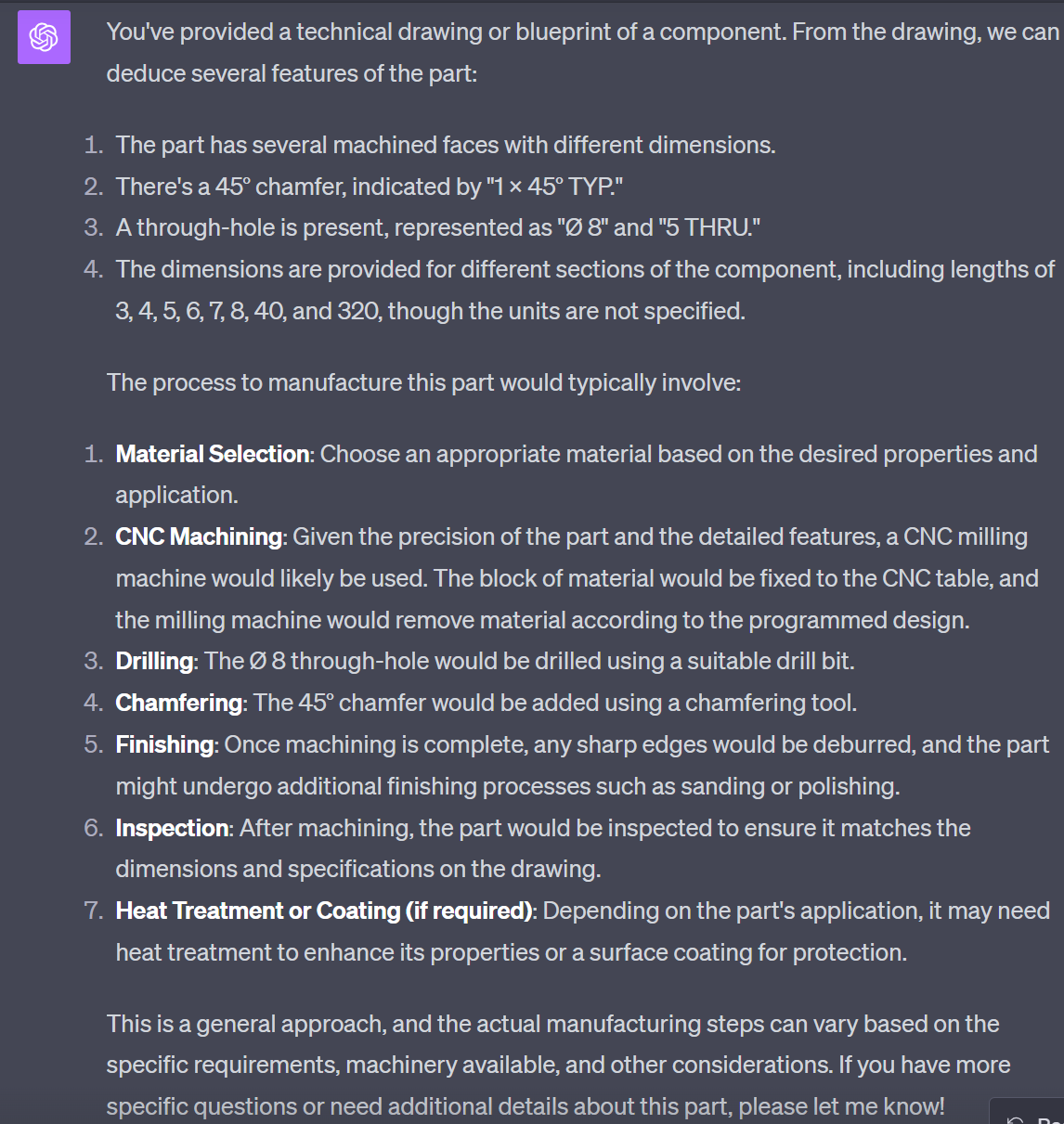
Response:
Deduction of features and dimensions from the drawing.
Suggested manufacturing steps based on the design.
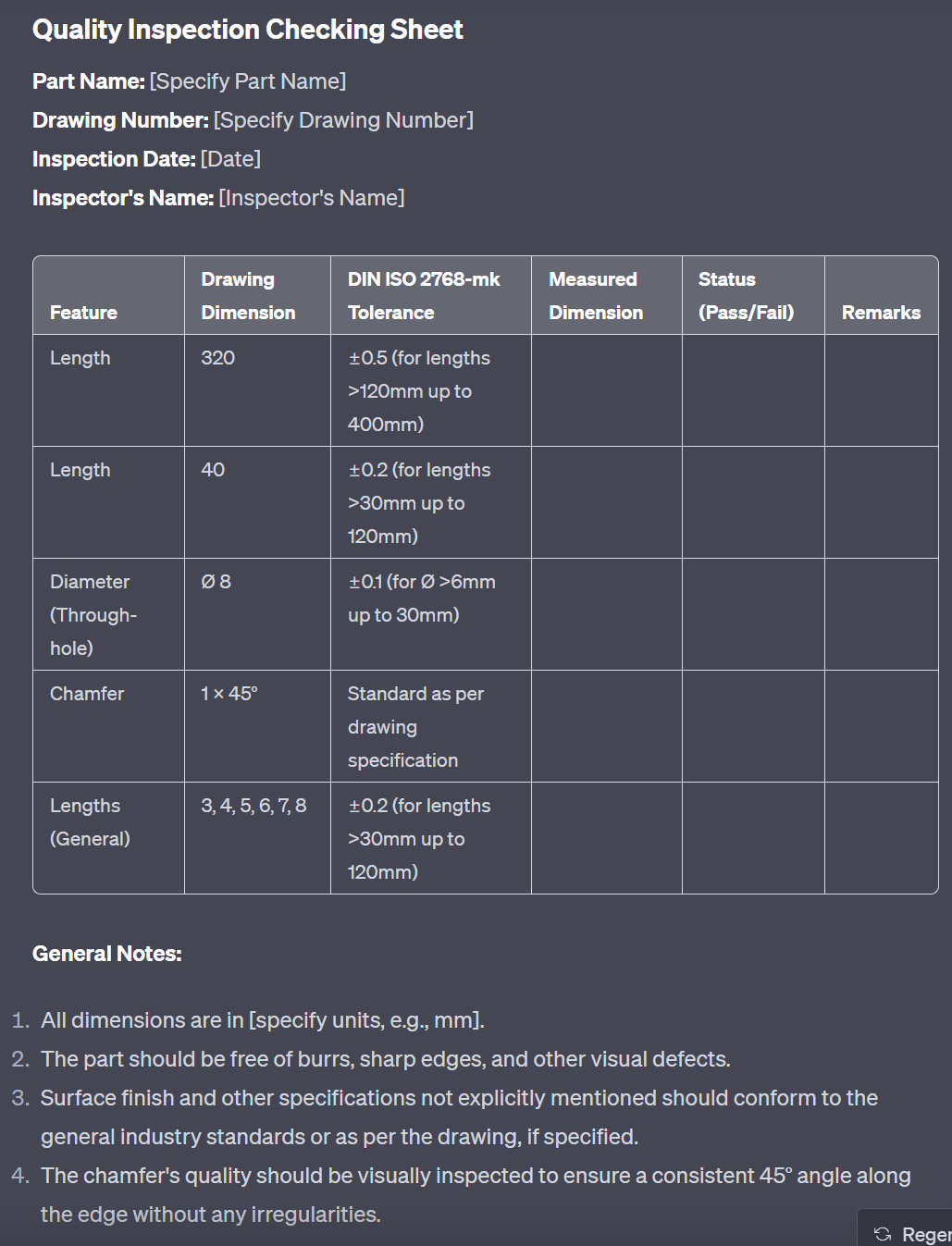
#5 Preparing QC sheet from engineering drawing
Prompt: Engineering drawing with DIN standards.
(used the same drawing as above and continued the conversation on it)
Response:
Generation of a quality inspection sheet.
Detailed specifications and tolerances.

#6 Component analysis and rework feedback
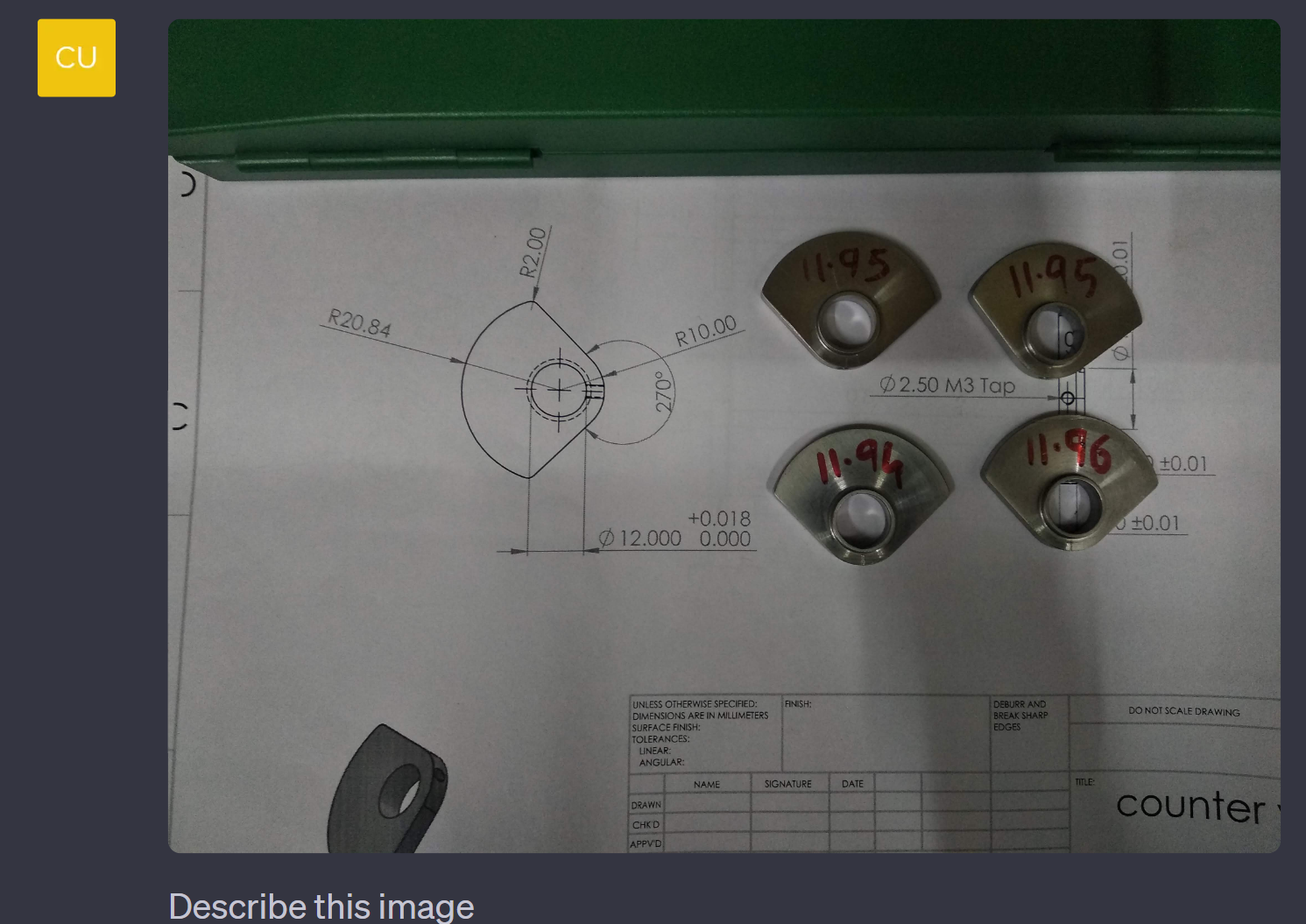
Prompt: Technical drawing of a component with actual images after manufacturing and inspection.
Response:
Analysis of the component's design.
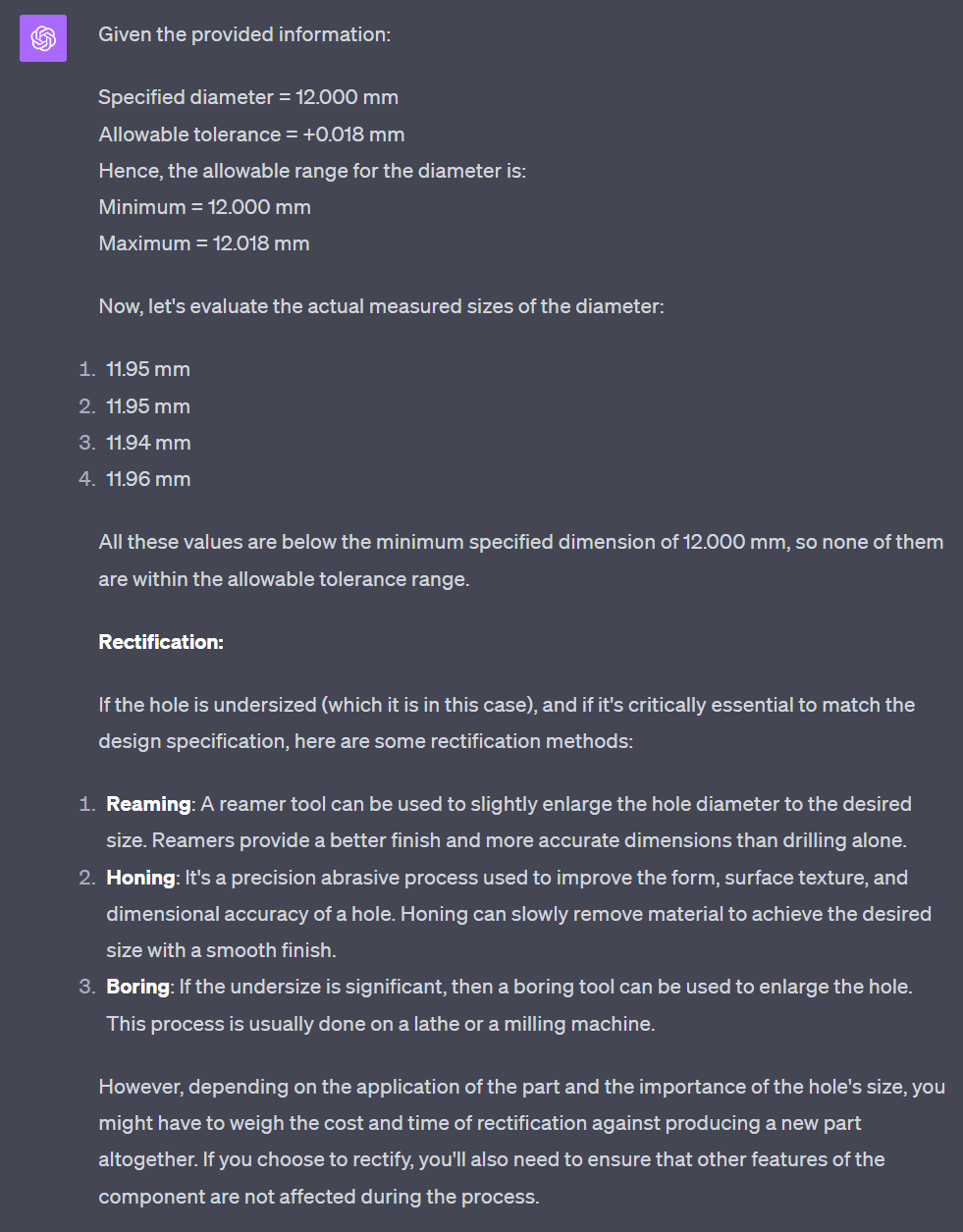
Dimensional check and pass / fail response.
Feedback on potential manufacturing processes for rework.
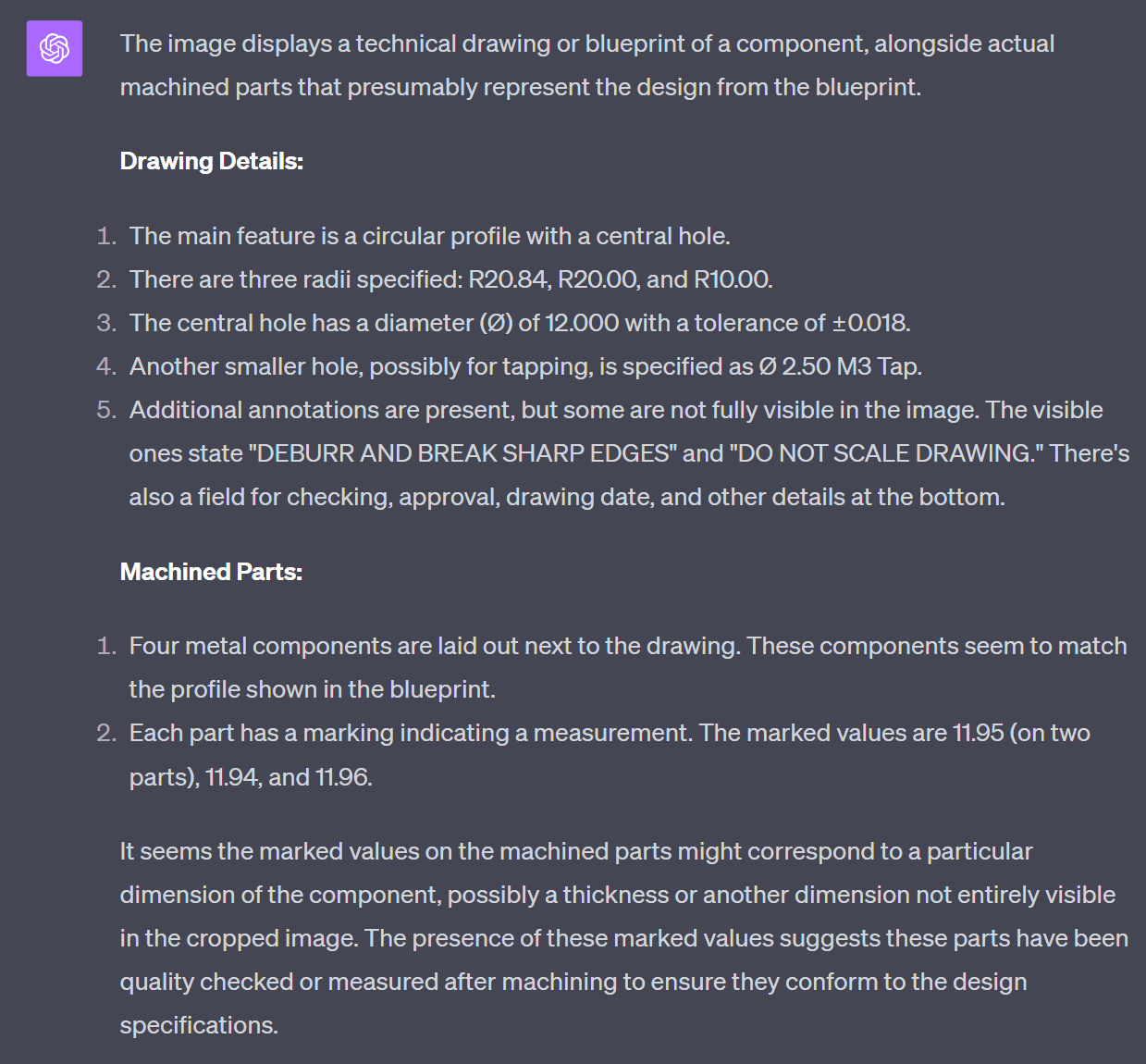
It did not accurately identify the tolerance. It considered ±0.018 instead of +0.018. Added the manual prompt again with correct tolerance to check the response.

Beyond my quick experiments, the true potential of ChatGPT-4's image communication feature in the manufacturing sector remains vast and largely unexplored. While we can streamline design validation processes, enhance quality control measures, and optimize manufacturing processes based on real-time feedback, the real magic lies in the unforeseen applications that will emerge as more professionals dive into its capabilities.
This was just a brief play around with ChatGPT-4 and some handy images I had. The real depth and breadth of its utility will unfold in the coming times. It's not just about the technology but how we, as innovators and thinkers, harness it. It promises much, and I believe it will challenge and expand our horizons, pushing us to think beyond the conventional and innovate in ways we haven't imagined yet. The journey ahead is exciting, and I'm eager to see where it takes us all.